

“何藩(Fan Ho)是唯一一个拍摄 50、60 年代香港的人,他对光影的表达充满戏剧性。更重要的是,他没有试图去记录香港,而是用镜头捕捉人物,普通的香港人。从他的照片中我看到人性,感到暖心,那些照片里的人像自己家人一样有亲切感。”
——《何藩:香港回忆录》
Born in Shanghai in 1931 and raised in Canton (today’s Guangzhou), in 1948 he moved to Hong Kong in one of the most chaotic periods in the history of this city: the inhabitants of the British colony had in fact quadrupled in the space of a few years due to the hordes of refugees who poured into the city fleeing first from the Japanese invasion and then from the civil war between the Communists and the Kuomintang of Chiang Kai-Shek.
Fan Ho’s family had not arrived among the desperate: his father was a wealthy merchant who set up a printing press as soon as he arrived in Hong Kong.
In the chaotic situation of the 1950’s in China, the new People’s Republic of China was being formed and the Communist Party took root under the leadership of Mao Tze Dong. Hong Kong, on the other hand, was under British influence and in these years of turmoil Fan Ho was one of the few, if not unique, photographers to capture images of China in the 50’s.
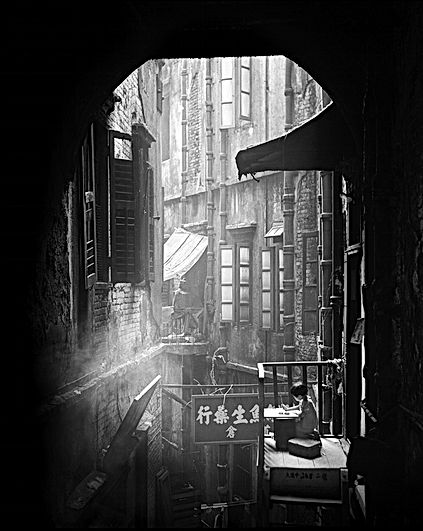


In his collections we find images that play on the contrast between light and shadow. You can breathe tropical air, you can perceive it by the intensity of the white light captured. In spite of the chaos of those years, Fan Ho captures a few elements that recall a city that seems to be deserted.

You can stop, catch your breath and stand by. In “Approaching Shadow”, Fan Ho expresses all his conception of photography: a patient waiting for the light to reach the right meeting point where the image will meet its perfection.
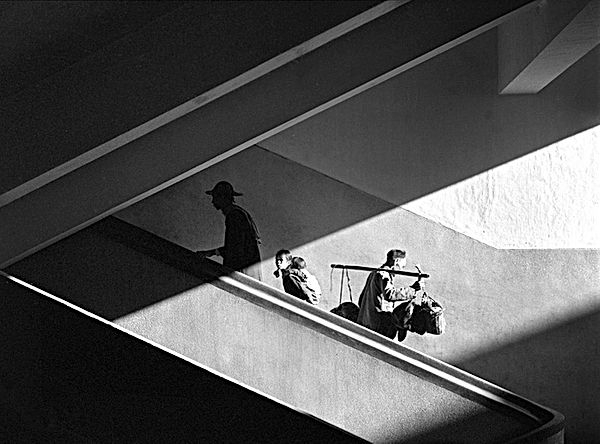
Fan Ho was indeed a unique photographer, something in his photos connect him to Henri Cartier-Bresson’s style. As Fan Ho itself declared one way he used to do photography was ” You wait for the subject that can move you, that can touch your heart, no matter if it’s an old man or an old woman, or even a kid or a dog. Then when you come to the right position, and combine it with the right background and other people, and also match it with the lighting, you click the shutter at that decisive moment.” – Fan Ho

 FuCinaOrientale